What financial markets are
The four regulated markets in India (equity, debt, forex and commodities), plus crypto, and what each one is actually trading.
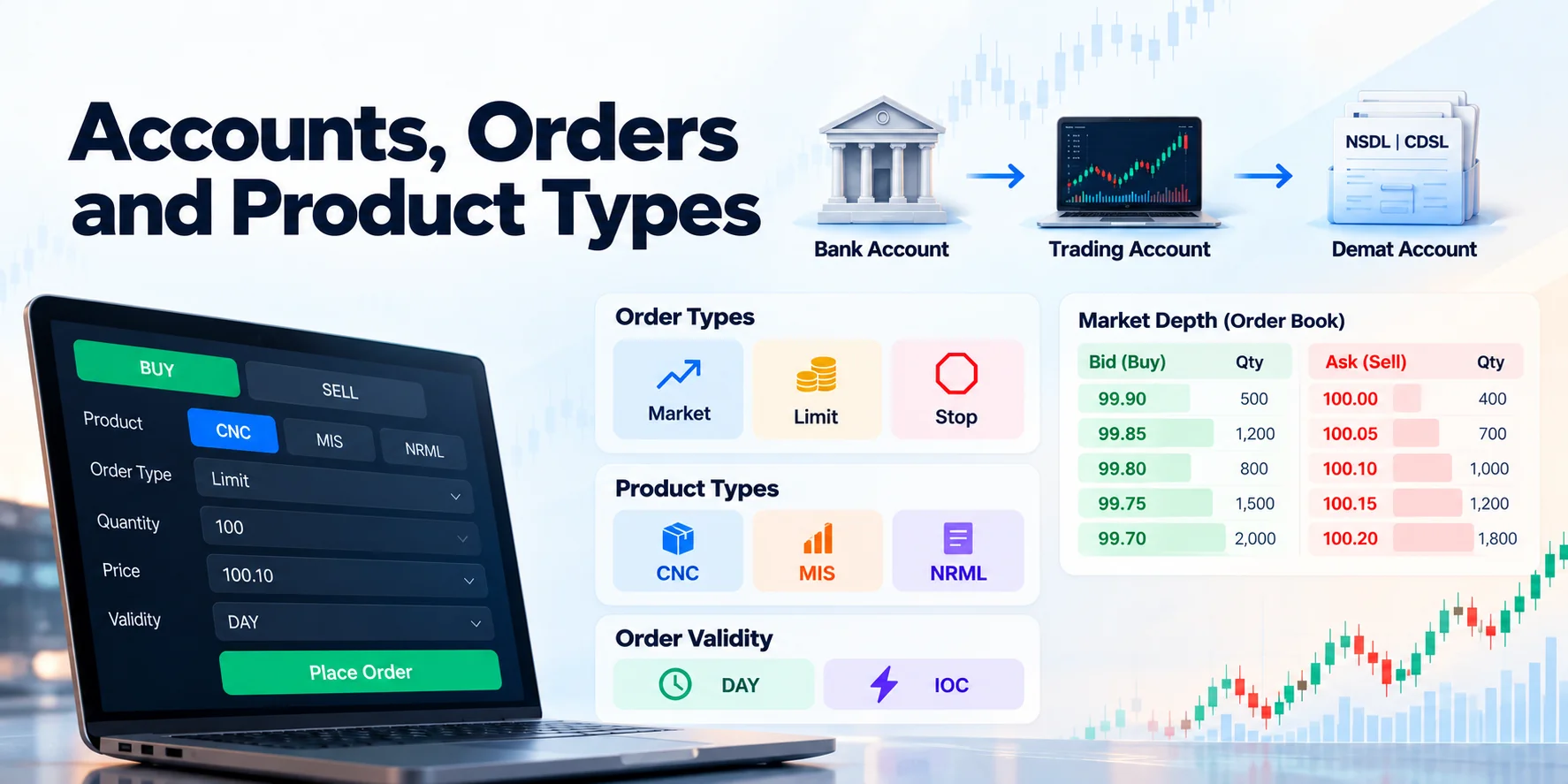
A financial market is a place where financial assets are bought and sold. The asset is a claim on something (a share of a company, a loan to a government, a currency, a physical commodity), and trading it transfers that claim from one holder to another.
Prices move because buyers and sellers disagree about what a future claim is worth.
The four regulated markets
| Market | What is traded | Return comes from |
|---|---|---|
| Equity (stock) | Shares of companies | Dividends and price gains |
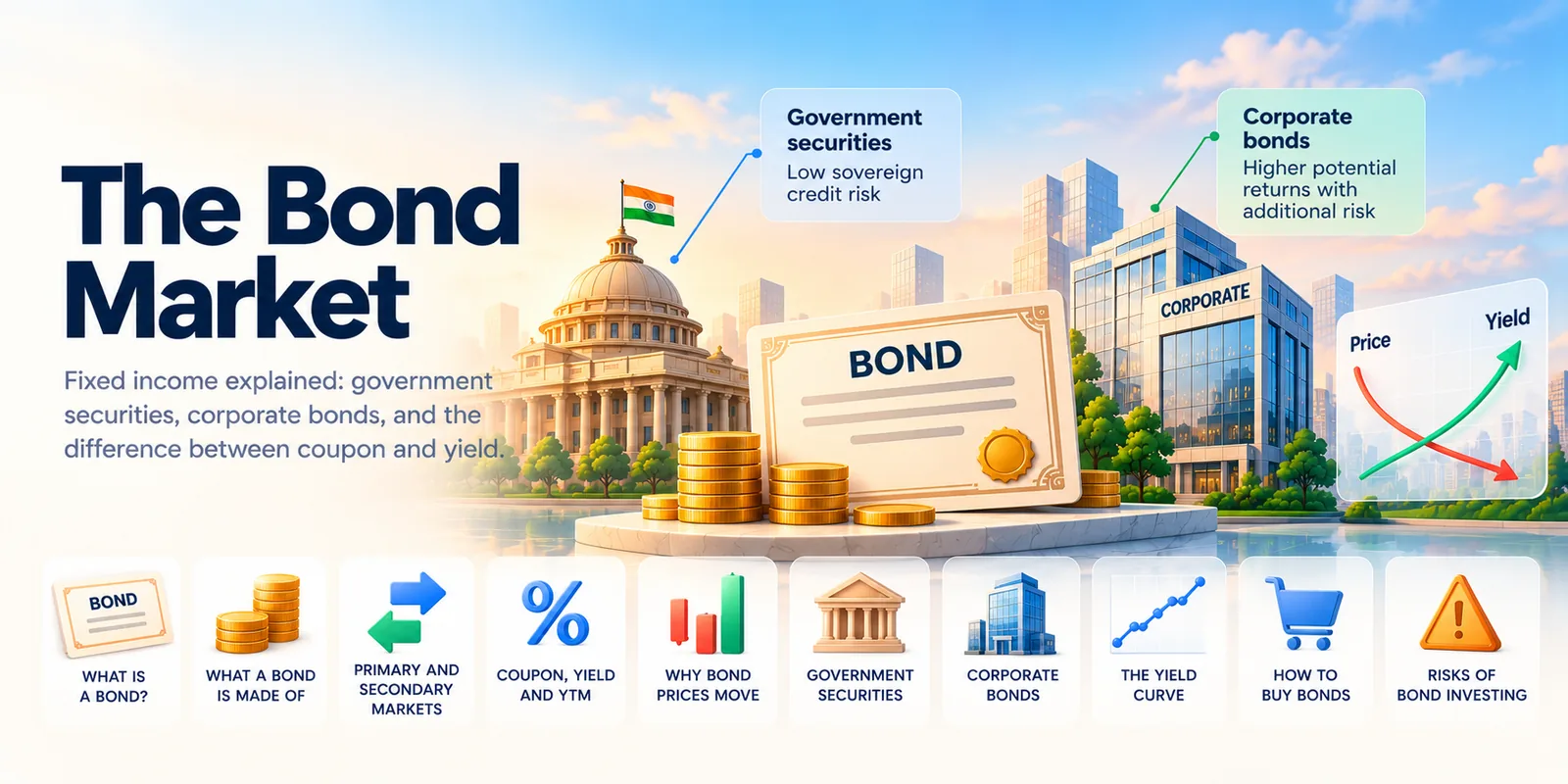
| Debt (bond) | Government and company debt | Fixed interest, repaid at maturity |
| Forex (currency) | Currency pairs | Exchange-rate movement |
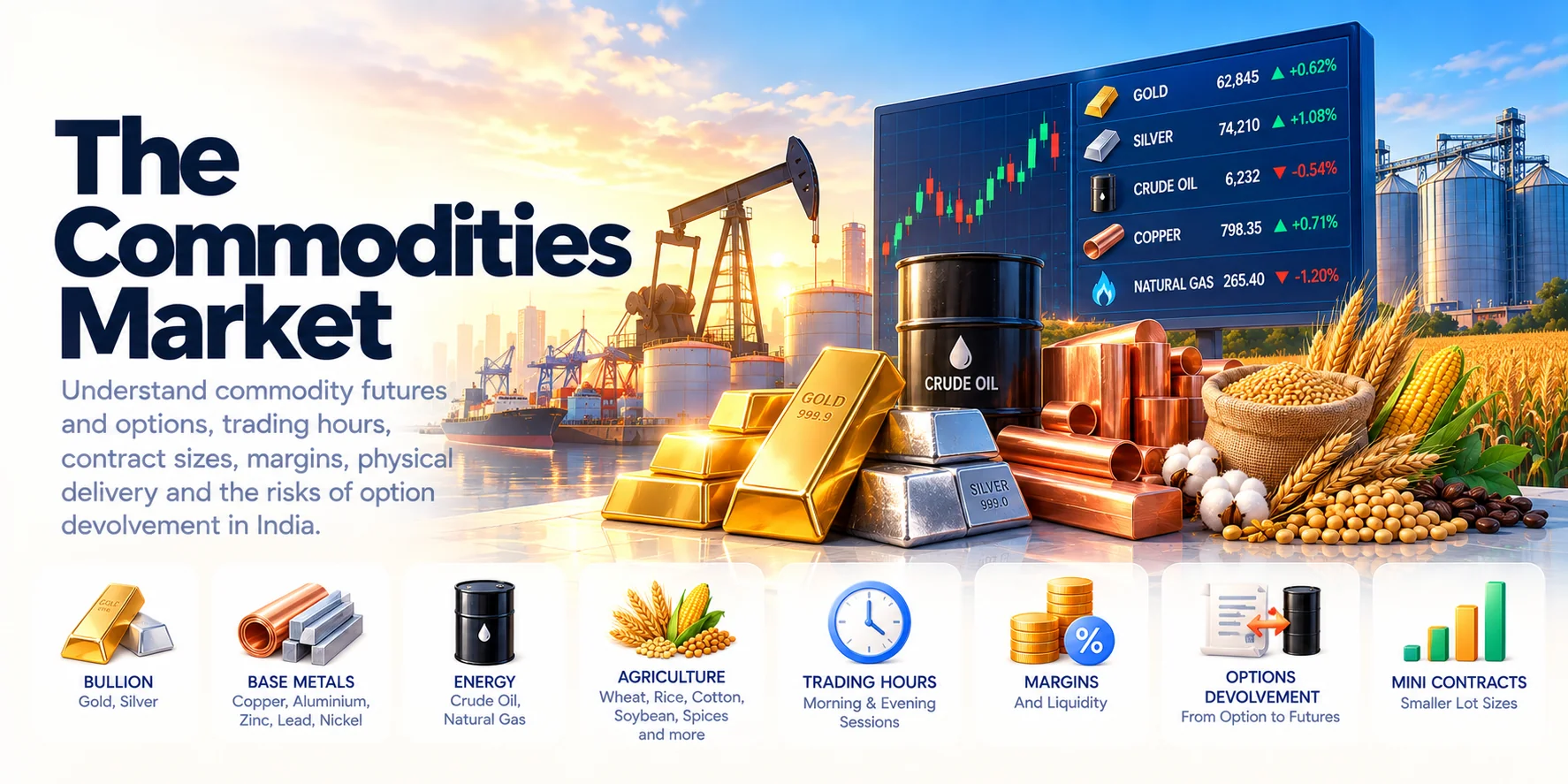
| Commodities | Raw materials, bullion, energy, agri | Spot and futures price movement |
They are not equally risky. On the usual ordering, equity carries the highest risk, debt the lowest, and forex and commodities are high. That ordering is a statement about the risk of the underlying asset, and it is not a statement about the return on offer: a higher return is what compensates for a higher risk, and the reality of investing is about why that does not guarantee an outcome.
Equity
Owning a share means owning a slice of the company: a claim on its future profits and, eventually, on its assets. There is no promised payment or date, which is why equity is the highest-risk of the four.
Debt
A bond is a fixed-income instrument: you lend money and receive interest (the coupon) at fixed dates, plus principal back at maturity. Because the repayment is promised, bonds sit at the low-risk end.
Forex
Currencies are always traded in pairs: you buy one currency while selling another. This is the market that sets what an import costs and what foreign income is worth.
Commodities
Unlike the three above, the underlying is a physical thing: a barrel of crude, a tonne of wheat, a kilo of gold.
Crypto
Digital assets sit outside the four regulated markets. There is no Indian regulator supervising them as financial products, no investor-protection framework, and no comprehensive statute. See the crypto market lesson for where it actually stands.
Next: market participants.